Don’t Blame Vibram

On May 6th, Runner’s World reported that Italian footwear company Vibram, makers of the “Five Fingers” running shoe, had agreed to a settle a class-action lawsuit alleging that the company engaged in deceptive advertising when it claimed its shoes strengthened muscle and reduced foot injuries. In the settlement, Vibram agreed to pay $3.75 million to be distributed to customers who purchased the Five Fingers shoes, and also agreed to discontinue the beneficial claims for its shoes in its marketing and advertising campaigns. However, the company expressly denied any wrongdoing or liability for its claims. In other words, they still believe in the benefits of running in the Five Fingers, even if there’s currently no compelling scientific evidence to back them up. Continue reading

Posted in Uncategorized | Leave a comment

Manzano to run at the 2014 Martinez Classic

leo

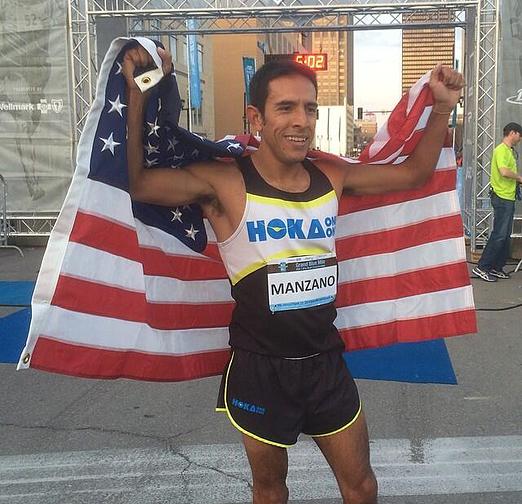
On June 5th, 2014, Olympic silver medalist Leo Manzano will be in Concord, Mass., to race the mile at the Adrian Martinez Classic track meet. And that’s only one surprising and interesting development for a local meet intent on getting national recognition. Continue reading

Posted in Pro Runners | Leave a comment

From the Archives: Did I Say That?

[Originally published May 13, 2008]

If the key to good coaching is good communication, I think I might be in trouble. It’s not that I don’t communicate, it’s that I seem to communicate much more than I actually mean. Continue reading

Posted in Coaching, High School Runners | 3 Comments

Running the 4×400 Relay

One thing I know about high school track and field is that no matter how small your team, no matter how weak and infirm it might appear compared to the Brocktons and Newton Norths of the world, you can always scrape together a 4×400 team. And when you do assemble a team from your spare parts (sprinters who consider one lap to be a distance race, distance runners who consider 400m to be the “start,” and miscellaneous jumpers and throwers), there’s a little magic that happens. Continue reading

Posted in Coaching, High School Runners | Leave a comment

How Fast is 13:02?

Ben_True

Ben True won the 5000m at the Peyton Jordan Invitational Sunday night, running a personal best time of 13:02.76, with Hassan Mead only four-hundredths of a second behind. When I saw those times, I thought to myself “Wow, that’s fast!” But then I thought “too bad they didn’t go sub 13:00…”
Continue reading

Posted in Pro Runners, Records & Statistics | 1 Comment

‘Born to Run’ Turns Five

BornToRun

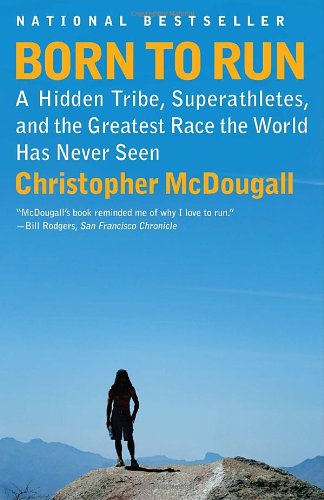
It’s hard to believe, but May 5th marks the fifth anniversary of the publication of Born to Run,  Chris McDougall’s manifesto on the subjects of ultra-distance running, minimalist footwear, and the athletic prowess of the Tarahumara people of Mexico’s Copper Canyon.

It’s an understatement to say that Born to Run changed the conversation about running. Actually, it would be more accurate to say that there WAS no conversation about running before the book came out. Afterwards, everyone was talking about running, including non-runners who couldn’t tell (and wouldn’t care about) the difference between a four-minute mile and a gym class mile. Continue reading

Posted in Books and Movies | 1 Comment

Their Marathon, Too

I brought my car in for service this morning, and the employee who was taking my information saw from my registration that I was from Newton and asked, “Did you watch the marathon this year?”

I admitted that I had, and then he asked whether I lived near the course. “About a mile and half away,” I said. After a few more comments on the desirability of living near the course, the security, and some other things, he sized me up and asked, “Are you a runner?”

I answered in the affirmative and as I did so, I mentally prepared for the questions I felt sure would follow: Had I ever run the marathon? Had I run it this year? Why not? Familiar questions with well-rehearsed answers.

But instead, the conversation went in a different direction. This guy, a service manager at a car dealership, starting telling me about how his wife had run this year, about how she had run in 2013 but had been stopped at Boston College after the bombs went off. He told me that he had thought that first marathon would be the last one, that she’d run it once and then move on, but no. She wanted to do it again this year, to finish. And now, having finished, she was talking about running it again, running other races. He didn’t put it this way, and I didn’t have the heart to tell him, but I sensed that she had fallen under the marathon’s spell, and that she was a runner now, not just someone who does the marathon once to say that they’ve done it.

He never did get around to asking me whether I had run. It was funny, in a way, and a little humbling. I had been prepared for the typical response from non-runners: the little shake of the head and the brief, but admiring acknowledgement of my status as a marathon veteran. I had been prepared for the momentary ego boost that comes when a complete stranger suddenly realizes you are THAT kind of runner. Instead, I was the one who wanted to hear the story of how his wife had run this year, how she had prepared, and what it had been like.

It was great, actually. It was great to realize that is was their marathon, too. It was great to realize that we were all on this ego trip together.

Posted in Marathon | Leave a comment

Five Running Myths Exposed

july2012cover_foOutside Magazine continues to be on the cutting edge of running research.

A friend forwarded me a link to a recent article that sets out to debunk several myths about running, training, and overall health (10 Running Myths That Are Slowing You Down).

This sort of thing is pretty harmless, I guess, and there is certainly value in pointing out that some commonly-held beliefs about running are not supported by evidence. Still, its pretty easy to set up straw man “myths,” and knock them down without doing a lot of heavy-duty lifting as far as research goes. In general, I find the conclusions fairly simplistic, and in some case, it seems the authors seem to be replacing one myth with another, equally dubious claim.

But then again, Outside Magazine has about 10,000 times as many readers as I do, so rather than criticize, I’ll imitate. Here, then, is my contribution to the genre: five running myths exposed:

Myth #1. If you run, you’ll look like a model.

You might think so from the covers of certain running publications, but no. Running might keep you thin (not a given), but it will not make you any more attractive, unless you count inner beauty. And it will really do a number on your feet and toenails.

Myth #2. People smile when they train.

Nobody I know smiles when they are training, least of all when they are doing one of Terry’s interval workouts. And yet, I often see articles about training that  show runners with beatific smiles on their faces as they effortlessly circle the track. I don’t get it.

And while we’re on the subject, another thing that drives me crazy is when I hear someone chatting happily during a race. If it’s such a lark for you, try running faster.

Myth #3. Marathons are fun.

No, they’re not. If they were, you wouldn’t be so glad when they’re over.

Myth #4. The best day for speed training is Wednesday

I just made this one up. But on the other hand, it could be true! In fact, I think you should undertake a six-month experiment to test this theory and let me know what you find out.

Myth #5. You can get faster by reading magazine articles

I have bad news for you: you are getting slower RIGHT NOW as you read this. It is a scientific fact supported by completely unfounded speculation that no one ever got fast from reading a magazine article. and blogs are even worse, so stop wasting time surfing the net and go get in some more mileage.

And don’t let me catch you smiling.


Posted in Attempts at Humor | 1 Comment

Runner in the House

This morning Joni and I woke up before dawn so that I could drive her to the airport to catch a 6:20 a.m. shuttle back to Washington where she lives and works. It’s an understatement to say that it was a real treat to have her here for an extended visit. She arrived a week ago Wednesday, just in time to make it to a Concord Academy track meet. She stayed for the Marathon and for another week, getting in lots of visiting with family and friends in the Boston area.

We managed a couple of runs together — one long run on Easter Sunday and another yesterday in which I turned around early, but she continued for a solid thirteen. There might have been more tandem runs, but my weekday schedule required me to fit in runs at the end of the day in Concord, while she was in the habit of running much earlier in Newton. Still, even though our opportunities to work out didn’t often, I really enjoyed all the little things that went along with having another runner in the house.

On her first day in town, she managed to get to the meet, which was in Weston, without benefit of a car by the simple expedient of running there. This made me really nostalgic for the days when I used to do things like that. It used to be a fun challenge to combine commuting with daily training, but these days I drive everywhere — a bad habit! Maybe seeing Joni’s example will inspire me to begin leaving the car at home more.

Another thing that’s nice about having another runner in the house is having someone who experiences the weather in a similar way. Not only can you commiserate with each other, you can also compare notes and conclude “it really wasn’t that bad once I got going.” Of course, when there’s someone else in the house who’s running in the rain, it wipes out any excuses you might have to skip your own run.

It’s even comforting to have someone who shares your bad habits. For example, usually, it’s just me leaving running shoes in the hall and running clothes hanging off the backs of chairs. When it’s just my stuff, it’s just clutter; but when it’s Joni’s stuff, it’s an opportunity to ask her about her run, how far she had gone, whether the rain had held off, etc. I’m sure Ann wasn’t thrilled when our kitchen became a laundry room, but to me it felt very familiar and homey.

But now Joni’s off again, and she’ll be logging runs in far-away places for a while. I’ll be the only runner in the house again, and even though it should be a familiar feeling, I think that it will feel strange for a few days. I’ll be reminded again that — contrary to some stereotypes — running is a tribal activity, and the lone, solitary runner is an odd duck, indeed.

Posted in Uncategorized | Leave a comment

Talent and Training

Improvement


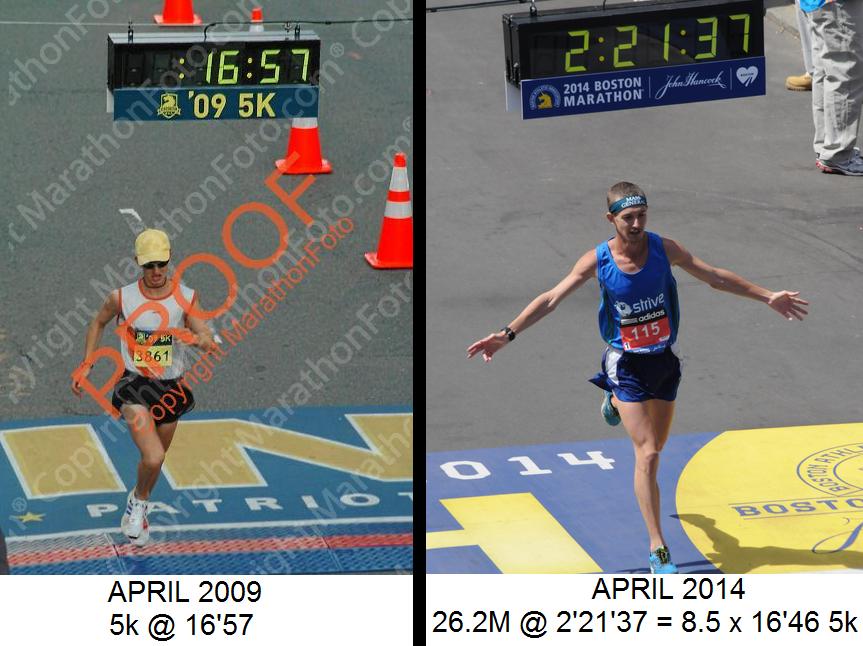
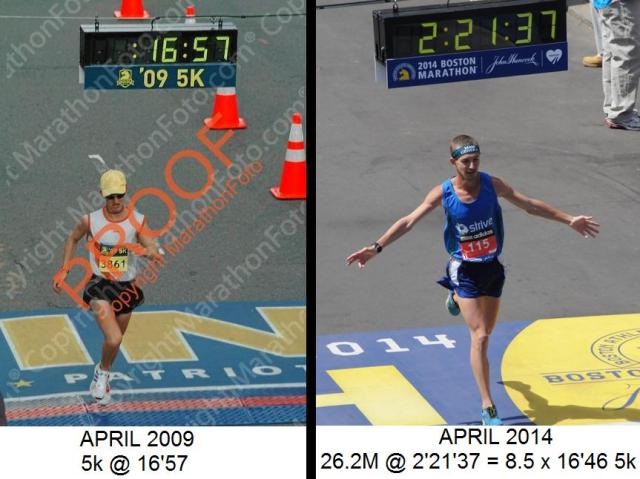
The photos above, which Tyler posted on his Facebook page the other day, are — in their own way — a challenge to a whole worldview about talent and training. One can gaze upon them with much the same feeling as Balboa is supposed to have had on crossing the isthmus of Panama and seeing the Pacific ocean for the first time.

Because it’s not supposed to be possible to improve that much. It’s an outrageous demonstration of the efficacy of training, but also such an outlier that it’s hard to know how much of Tyler’s improvement is replicable. Tyler probably trained as hard or harder as many of the favorites in preparation for Monday’s race, but more important: he didn’t break down; he improved. This is a much greater mystery than how a 2:09 guy beat a bunch of 2:05 guys. How did a 16:57-for-5k guy run 16:46 pace for a full marathon?

Some background and disclosure:

Tyler ran cross country for four years at Concord Academy. I came on as cross country coach in 2007, Tyler’s senior year. As he has described elsewhere (in case, you haven’t noticed, he has a knack for getting interviewed), that season he really caught the running bug and started training harder and improved his 5k time from 20-something to 18:28 in his best race of the season. I can tell you that there was no “secret” to his training or to my coaching. He increased his mileage gradually, did the usual workouts, and ran races.

After the season, he promptly ratcheted up the mileage and almost as promptly suffered a stress fracture. It took a while for him to heal, so that it wasn’t until the summer after his graduation that he began the training that would gradually transform him. The picture from ’09 represents a year of steadily increasing training. I remember being really impressed that an 18:28 guy was running sub-17:00, and had already started using him as a positive example of positive adaptation to sensible training stress.

What is one’s personal ceiling of improvement from training? Is talent a myth, and can anyone who is willing to do the work become an elite runner? No, I reject that hypothesis. Each individual has innate gifts for running, some of which are self-evident from their first swift step, while some are deeply buried in the genome and are only revealed by extended practice.

The thing that is so astonishing about Tyler is that he has talents that are applicable to being a terrific runner that remained hidden to almost everyone (including me) for years, and are still poorly appreciated by some (for example, to his college coach) to this day. I want to enumerate some of those talents, because I think doing so forces us (coaches especially) to acknowledge that we are often wrong-headed in our approach to talent development and personalized coaching.

1. Tyler has always been able to run fast without sprinting

This is a subtle point, but it is really important. Tyler and I used to have arguments all the time about the value of speedwork in his training diet. I’m simplifying this a little bit, but basically he would come out of “base” training and have no difficulty going to the track and running 28 seconds for 200m. Then he would say something like, “I need to do speedwork so I can run fast for 3k and 5k. I would try to point out that he was already capable of running mile world record pace without difficulty, and that piling on anaerobic work might not be the best investment of his time. Luckily, the Tufts coaching staff provided both of us with the context for testing this theory. In college, Tyler was encouraged to hammer out hard track workouts on a regular basis. I’m sure he’ll comment on this, but as an outsider I observed that he always raced best at the beginning of the season before the speedwork had a chance to do its damage.

Now, for most runners, heavy doses of speedwork are essential preparation for racing distance of 5K and under. But Tyler is not most runners. His speed is not fast-twitch speed, it’s slow-twitch speed. In other words, his slow-twitch fibers are capable of carrying him along at a frightfully quick tempo. It was his slow-twitch fibers that were responding to his base training. I believe that speedwork didn’t have the expected effect because he didn’t have enough fast-twitch fibers to respond positively to the kind of hyper-fast workouts he was doing at Tufts.

2. Tyler is able to train fast

This is perhaps a corollary to the above, but it bears repeating. Tyler’s comfortable aerobic runs are really quick, often South of 6:00 pace. Unlike many of his college teammates, he didn’t need to take long runs at an easy pace. Another way of expressing this is that Tyler’s aerobic comfort zone is a lot faster than that of runners who might be able to destroy him in a mile or even a 3k.

A practical consideration for him, then, is how to stimulate further aerobic adaptation. He discovered on his own, without any help from me, that long fast runs were hugely beneficial, and he has figured out how to structure his training to include them. I can’t tell you how intimidating it is to see him pencil in a 25k run at marathon pace, or many repeat 3000s or 5000s at half marathon pace. These are long, hard aerobic efforts and would destroy many “faster” runners.

3. Tyler can survive his high-mileage training

Tyler deserves a ton of credit for doing all the little things to keep himself strong and healthy, including attention to core workouts, sleep, diet, and recovery. Even so, its remarkable how — when he follows his own training plan — he avoids injury. I don’t know how to explain this, so I’ll just speculate that there’s something about his body that allows him to run lightly, without jarring his skeleton or shredding his soft tissues.

4. Tyler’s has world-class ability to focus on the task

Finally, the most important point of all is that Tyler has the mental muscle to put a huge amount of effort into a workout, and then do the same thing again and again over weeks and months. I am the first to admit that when Tyler shares his training plan with me, my first reaction is that it’s just too much — how could anyone do that without getting, you know, TIRED of it? But when I look for the tell-tale signs of mental staleness, the diminishing returns, all I see is Tyler expertly riding the wave of his training to better results. That is a testament to his capacity to enjoy what he’s doing. Maybe that’s more an aspect of personality than a talent, but it’s still pretty special.

A couple of final notes: Comparisons are odious, as the Bard says, but I can’t help comparing Tyler’s time in the marathon to the times of other former high school stars. I don’t do this to diminish the accomplishments of others, but rather to return to the theme I mentioned at the beginning. We coaches are frequently wrong about talent. We see someone who is fast, and we identify that as talent. We see someone who is (relatively) slow, and we see that as an absence of talent. Time and again we miss the signs that an athlete has “invisible” talents that are just waiting for the right conditions to emerge.



Posted in Coaching, Marathon | 1 Comment