Race Report: USATF-NE Indoor T&F Championships

On Sunday, I raced for the first time in five months, competing in the geezer (40+) heat of the 800m at the USATF New England Indoor T&F Championships at Harvard. In some respects, the race was an odd choice. I’m no 800m specialist, have no particular affection for the event, and haven’t done specific training for it. Like every other runner I know, I’ve just been trying to get through the winter with some kind of mileage base intact, either by slogging away on the roads bundled up like an Eskimo, or resorting to treadmill running when the plows are out in force. Once a week, I head indoors for a track workout, but even then, the paces we run are intended to prepare us for 5ks and longer, not four-lap sprints around 200m ovals. Continue reading

Posted in Race Reports | 4 Comments

Do Real Runners Take Walking Breaks?

BR drinks ties 2

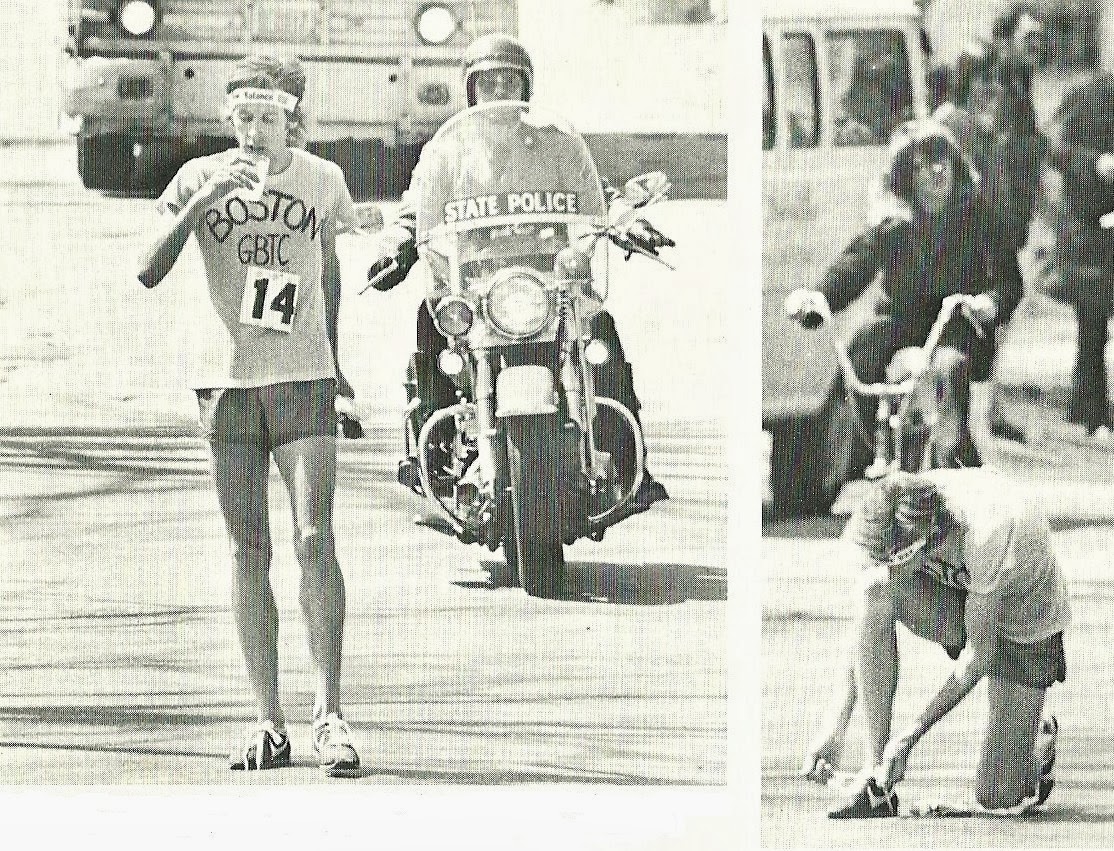
Like many serious runners, I have an aversion to walking, at least when I am supposed to be running. Walking is what happens when something goes horribly wrong, for example, when you horribly misjudge your pace in a marathon, or when that twinge in your leg becomes a throbbing pain, or when you are overtaken by fatigue. Whatever the reason, having to walk during a run or (God forbid) a race, always feels to me like a shameful thing.

But why should this be so? Why did I long ago internalize the idea that nothing was as important as continuing to run, even as one’s stride became a stumble and one’s mind sank into fatigue-despair? Continue reading

Posted in Running Research | Tagged , , , | 3 Comments

An Enviable Record of Fitness

Fitness Trackers

I’ve been vaguely aware of the burgeoning market for fitness trackers, those wearable gizmos that help you record and analyze data about your health and daily activities, everything from what you eat, to how you exercise, to the duration and quality of your sleep. But until today, I had little interest in collecting all that information about my daily life, and certainly not keen on sharing it with anyone else.

So imagine my surprise when one of the first emails I received Tuesday morning was this cheerful invitation from a company called Jiff offering to enroll me in a program that would reward me for taking “daily actions to manage my health.” Continue reading

Posted in Attempts at Humor, Injuries & Health | Tagged , | 2 Comments

Millrose Games 2015

20150214MillroseGamesRossDettman-082_orig
The Millrose Games is one of the best and longest-running indoor track meets in the world. From 1914 to 2011, the Millrose Games was held at Madison Square Garden with most races contested on an 11-laps-to-a-mile banked track. In 2012, the race was moved to the Armory building in Washington Heights and shifted from Friday night, with a schedule that ended close to midnight, to Saturday afternoon and early evening. Although there was some concern that changing the date and venue would erode the tradition of the meet, the level of competition and the opportunity for world-class runners to run on a world-class track have made the meet both exciting and relevant. Continue reading

Posted in Pro Runners | Tagged , | 3 Comments

From the Archives: Watching Fast People

[In between cleaning up from the last storm and waiting for the next, in between treadmill runs and parking lot runs, and in the middle — but not finished with — several running books, I got nothing this morning. So here’s a another edition of “From the Archives,” a short essay that seemed appropriate for this time of year. It was originally published December 27, 2007.]

With winter settling in, and runners suffering from the usual blues and blahs of trying to maintain their training while the snow piles up outside, there are a few pleasures of the indoor season that help balance the ledger. One of them is watching really fast people work out. Continue reading

Posted in Indoor Track, Training | Leave a comment

The Case for Winter

snowtire

(Photo: The Swellesley Report – theswellesleyreport.com)

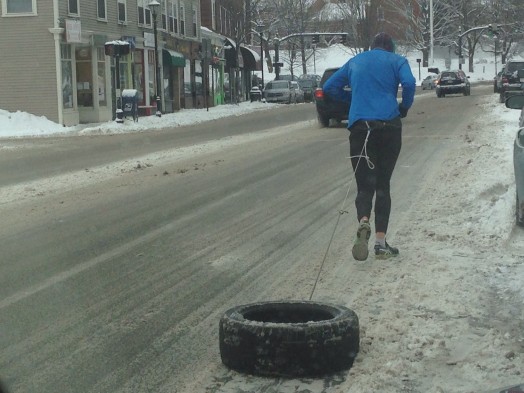
It’s hard to believe, but only three weeks ago, Boston’s total snowfall for the winter of 2014-2015 stood at less than six inches. Since then, nearly six feet of snow has fallen on the region in an unprecedented stretch of winter weather that has set records for the amount of snowfall in a 14-day, 20-day, and 30-day period, with even more in the forecast. With all that snow to contend with, towns have been exhausting their snow removal budgets, schools have been canceling classes, the MBTA has been experiencing repeated operational failures and closures, and runners have been… well, running, actually… although maybe not in the way they would have liked. Continue reading

Posted in Training, Weather and Seasons | 4 Comments

Lagat the Master

Is Bernard Lagat about to “ruin” masters track?

Here’s how I thought world-class open runners were supposed to graduate into the masters ranks. Approaching their fortieth birthday, they become less and less competitive and more and more “inspirational.” They observe proper decorum and slow down, losing a step and then two, perhaps disappearing from the scene for a while as they try to avoid more wear and tear on bodies that have seen too many injuries brought on by too much hard training. When they emerge again, these new forty-year-olds enter open races to be pulled along by faster runners for a while, or enter masters competitions to relive that feeling of being the top dog. And all the while, they  accept the generous applause that comes their way for their lifetime achievements and body of work. The fans appreciate them as track “oldies” whose presence brings back pleasant memories of past glory days.

But they are NOT supposed to pose any real threat to the young studs.

Well, obviously someone forgot to tell all this to Bernard Lagat, who turned 40 in December and is not following the script. Instead of lowering his expectations and his sights, he appears to be competing in high-profile open meets with the intention of winning races against world-class runners 10-20 years his junior.

For example, on Saturday night, Lagat came within a few hundredths of a second of winning the 3000m at the New Balance Indoor Grand Prix meet in Boston. In the end, Dejan Gebremeskel had just enough to get by Lagat in the final meters, but Lagat showed a very good kick, closing in 54.05 seconds for the final 400, with a 26.22 last lap. It was a classic Lagat race, completely under control with a devastating turn of speed.

Not that he seemed too concerned about it, but Lagat’s time of 7:48.33 obliterated the previous 3000m masters world record by over 13 seconds. That would have been impressive even if the race had been set up as a time trial, but it was an honest-to-goodness race, complete with tactics and a burst of speed at the end. One has to think the time would have been a lot faster in an evenly-paced effort.

Lagat taking on the world as a forty-year-old and rewriting the record book brings to mind Merlene Ottey, the great Jamaican sprinter (now a Slovenian citizen), who holds the 100m and 200m rceords in the 35-39, 40-44, 45-49, and 50-54 age groups. To my mind, Ottey completely redefined possibilities for age-group sprinting. At the age of 44, she competed in the 2004 Olympic Games, where she set the 200m masters world record, running 22.72. No other woman has come close to that, or any of her other age-group marks. I don’t know if she’s still competing, but Ottey will turn 55 in May of this year, raising the possibility of still more records.

Lagat is a long way from that kind of longevity, but he does seem poised to rewrite the middle-distance records for his current age group and redefine the possibilities for 40-year-olds. To provide a little more context, here are some of the current Masters World Records for Men 40-44:

Indoor

  • 1500 – 3:44.12
  • 1M – 3:58.15
  • 3000 – 8:01.54  7:48.33 (Lagat, 2/7/15)

Outdoor

  • 1500 – 3:42.02
  • 1M – 4:01.62
  • 3000 – 8:02.54
  • 5000 – 13:43.15

Next weekend Lagat will be running the Wannamaker mile at the Millrose games. He’ll have his hands full racing a ridiculous field that includes Centrowitz, Willis, Manzano, Lalang, Cheserek, Leer, Jager, Casey, O’Hare, Merber, Wieczorek, and Gregorek. It’s hard to predict that he’ll win, but when the dust settles, it’s highly likely that Eamonn Coughlan’s master’s mile record will be history. And if there’s a timing device at 1500m, that record will be gone, too.

Who knows how long Lagat will go on, and how many records he’ll get around to breaking. If he stays healthy and has a pretty good year, he’ll get all of them. He might very well get the outdoor 3000 record en route to the 5000 record (remember, he ran 13:06 for 5000m last summer, which means he ran 5000m at an overall pace that would have brought him through 3k in 7:52…).

How crazy is that?

Lagat’s example might cause a lot of 40-year-olds to recalibrate their standards for excellence. I actually feel sorry for all the men in their early forties who are about to see the world records for their age group recede like distant galaxies in an expanding universe.

Posted in Pro Runners | Tagged , | Leave a comment

Too Much of a Good Thing

This week, the Journal of the American College of Cardiology published a study claiming that, while jogging was associated with lower rates of long-term mortality from all causes, the optimal “dose” of jogging was uncertain. Actually, the study went a little farther than that, strongly suggesting that those who engaged in what the study called “strenuous jogging” had mortality rates similar to sedentary people. In other words, a little jogging was a good thing, but a lot was enough to reverse all the benefits. Here’s how the study put it:

The findings suggest a U-shaped association between all-cause mortality and dose of jogging as calibrated by pace, quantity, and frequency of jogging. Light and moderate joggers have lower mortality than sedentary non-joggers, whereas strenuous joggers have a mortality rate not statistically different from that of the sedentary group.” (Dose of Jogging and Long Term Mortality – The Copenhagen City Heart Study)

I believe that studies like this one, and the glib articles that report on them, are guilty of contributing to scientific illiteracy, and to the large numbers of people who say that they don’t trust “science” or consider a science-based statement as only one of many points of view that deserve equal consideration. Continue reading

Posted in Injuries & Health, Running Research | Leave a comment

Small Circles in a Big World

6m_route

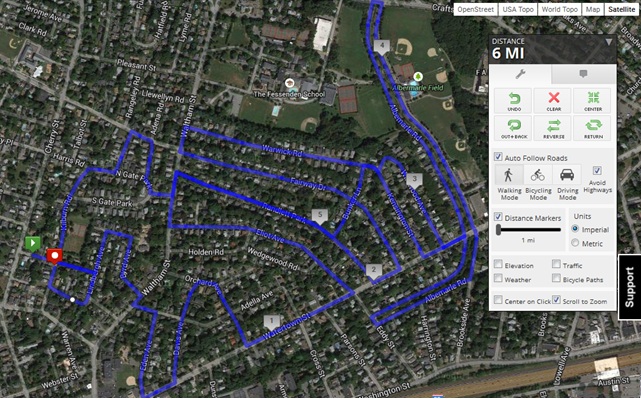
It’s tough to be a runner in New England when the deep snows come. Usual running routes become treacherous or impassable. Each day feels like a life-and-death search for safe places to get in a few miles. Runners in winter seek solid footing the way Wildebeest in the Serengeti seek drinking water. And when our search is fruitless, and when the forecast calls for more accumulation on top of the snow we’ve already endured, we sink into a funk and curse Mother Nature.

And then we adapt. Continue reading

Posted in Uncategorized | 5 Comments

Love for the DMR

Centrowitz-Berry-Sowinski-Casey-WR-Armory15

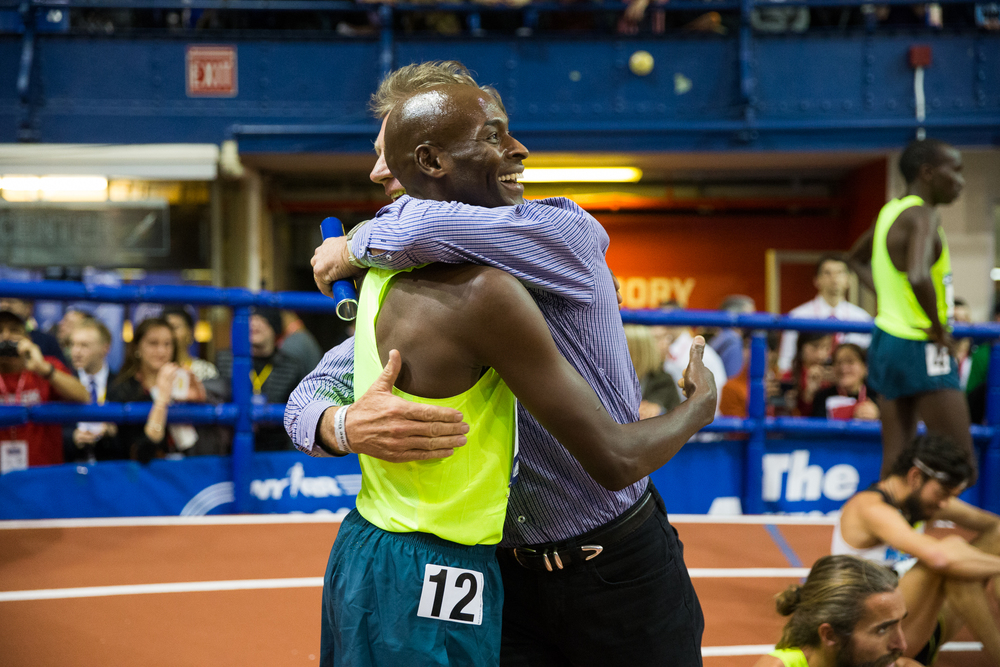
On Saturday, at the Armory Track Invite in the Bronx, four American professional runners representing Team USA set a new world indoor record for the distance medley relay (DMR), running 9:19.93, just over six seconds faster than the previous mark. Maybe that wasn’t the most important sporting event that you watched over the weekend. Maybe you were distracted by other things that seemed more important, or maybe you don’t even know what the DMR is or why it matters. That’s OK, I’m not here to judge. Continue reading

Posted in My Back Pages, Pro Runners, Racing | Tagged , | 10 Comments