Amazing Life

candles

Happy Birthday, Joni!

Thirty-two years ago today my independent-minded daughter attempted to leap into the world feet first. However, the good doctors and nurses at Brigham and Women’s Hospital determined that would be too dangerous, so she was delivered by emergency Caesarian Section on the afternoon of January 4th, 1984. Since then, few people have had any luck preventing her from leaping into new worlds, no matter how strange or unfamiliar. Continue reading

Posted in Uncategorized | Tagged | 2 Comments

Tanzania – Part 4: Tarangire


TZ_Tarangire_at_sunset

Running Log, 12/28/10 — 3 miles, out and back from L’Oasis

After our day in Monduli, we returned to Arusha Monday night and spent all evening sorting through our stuff, separating the things we would need for our eight-day trip through the national parks from the things we could leave until our return. About half of our luggage and a lot of the things we had brought from the U.S. for Joni were packed away and left for later. What was left still looked like too much.

After the blissful experience of the previous day’s run in the hills outside Monduli, my three-mile run in Arusha was a hard return to reality. I struggled to get out of bed, and pulled on my running stuff with an utter lack of enthusiasm. As I ran along the now familiar main highway, the air seemed dirtier and the road surface harder. Other than that, the run made no impression on me, and I devoted one listless sentence to it in my journal. Of course, with a nearly year old running streak on the line and only a few days left to claim the accomplishment of running every day of 2010, there was never any doubt that I would do the run. But as I trudged joylessly up the hill back to L’Oasis, I supposed that if the streak hadn’t been there, I would just as soon have slept in. When I got back, instead of a leisurely breakfast, I had to hustle to take a quick shower (my last for a while), and eat a hasty plate of toast and fruit.

This was the first day of our journey into the national parks, which meant the first day of stuffing ourselves and our belongings into (or on top of) the land rover. The land rover would become our home away from home, not only our transportation but our only protection from the predators whose domain we were about to invade. Rob, Peter (our driver), and Henry (our cook) appeared on schedule at 8 a.m. It took about 30 minutes to pack everything, and then we were off. Well, sort of. Before heading out-of-town, we first drove back into the city to pick up supplies and other last-minute necessities. These included cases and cases of water, several dozen eggs, and various other sundries. In addition to the collective supplies, this was our last chance to get personal items. For Joni, this meant buying more air-time for her cell phone (yes, there is cell phone reception in parts of the Serengeti). For Loren, this meant getting the next volume of Stieg Larsson’s Millenium trilogy. For me, it was a slim book called “Beginning Swahili,” which would become my constant companion for the next week.

TZ_Loren_in_RangeRover

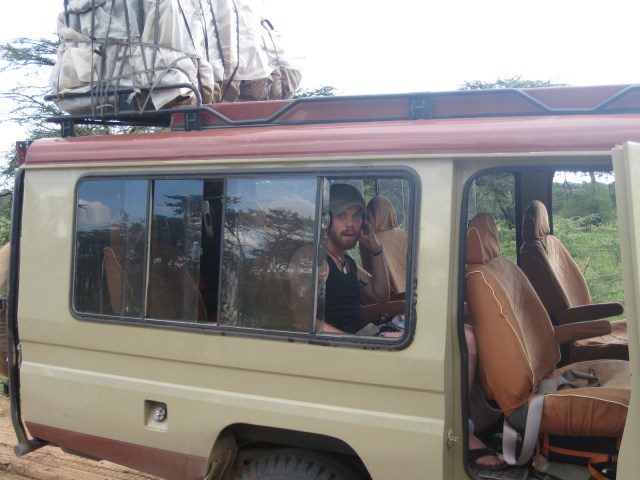
Loren in the Land Rover.

With the shopping, and various other delays, we didn’t leave Arusha until well after 10:00 a.m. Our plan was to pick up Oju, who would accompany us to Tarangire National Park where we would camp for one night. We would then drop him at a spot where he could get a dala dala back to Monduli and we would continue, first to Lake Natron and then to Loliondo and the Northern entrance to the Serengeti.


The drive to Tarangire was uneventful except for a stop we made at a small roadside market. Within seconds of the land rover pulling to a stop, it was surrounded by a crowd of Maasai women pressing up to the windows with necklaces, bracelets, and other handmade items. We had been told that this was likely to happen, but being told hadn’t really prepared us. I didn’t want to buy anything, and after exhausting my repertoire of ways to say “no, thank you, I don’t want any,” I gave up and turned back to my Swahili book. The irony of the moment would weigh on me for several days. As the trip went on, we became more and more immune to this kind of interaction with the Maasai. That is, we learned to be indifferent.

We arrived at Tarangire a little after noon and waited for what would become a familiar twenty-minute ritual of having Rob pay our fees to enter the park. Why it should take so long was never clear to me, but I decided I didn’t really want to know what was involved and whether it involved corruption of some kind. Anyway, having obtained the necessary permission, we drove for about 15 minutes to a campsite and dropped off Henry and all our gear. Then we started the first of many game drives.

I am not going to recount every new animal sighting. It would be time-consuming for me and boring for my readers. I will say that Rob had set up our trip with the same kind of genius that you see from those who design programs for fireworks. With each new place we drove, there was something new to see, something more exotic than the last place. It seems comical now that our first sighting of a giraffe was an occasion for ten minutes of taking pictures. In the coming days, the sight of a giraffe here or there would become almost commonplace, and might inspire a casual remark, but little more. So too, with baboons, zebras, bearded gnus, and even elephants, although it’s hard to get used to elephants.

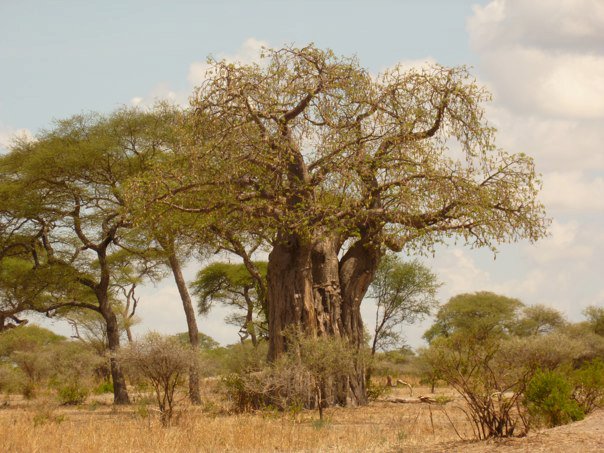
Anyway, the highlights of this drive were our first sightings of all of the above and more; our lunch stop where we matched wits with the sneaky, thieving vervet monkeys; and the baobab trees. I never got tired of elephants or baobabs.

TZ_Baobab

Baobab tree at Tarangire National Park.

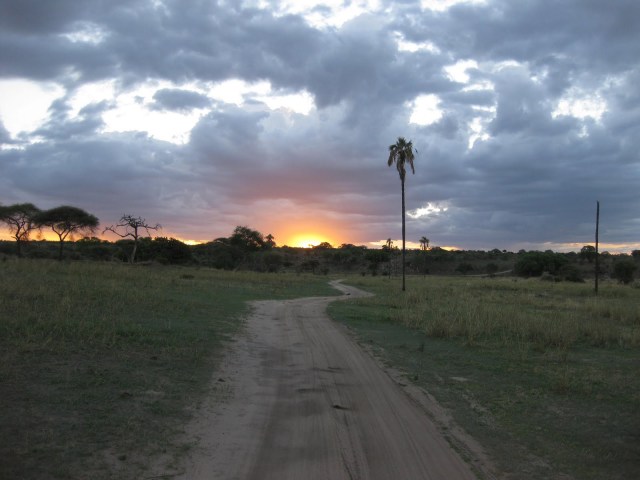
As the sun went down, we returned to our campsite. This was our first sunset outside the city, and the views were stunningly beautiful. I’ve included a picture, below, showing the road to our campsite.

It was late when we got out of the land rover, and we ate our dinner by torchlight. Before crawling into sleeping bags for the night, we were given a stern lecture by Rob about not leaving our tents in the dark. I won’t repeat his instructions about what to do in case we felt we couldn’t wait until morning to relieve ourselves. Anyway, his talk ensured that I would spend my waking moments, and there were many, listening for the sound of animal incursions into our encampment. It was a long night.


Running Log, 12/29/10 — 22 minutes w/Oju up and back the road at our campsite at Tarangire

I was very happy when it finally began to get light. Our tents had been hot and stuffy and it had taken a while to figure out how to ventilate them properly. Ann had fallen asleep quickly, but I lay on my back for what seemed like hours trying to think cool thoughts and trying not to listen too carefully for the sounds of large animals in the night. It didn’t help recalling Rob’s words of caution should we happen to feel the “call of nature” before it was light enough to safely cross the campground to the toilets. I don’t know how the others felt, but being told that I was confined to the tent for the next eight hours made me anxious and restless. As a result, I slept fitfully, and it was a great relief to have the sun finally come up, and to be able to climb out of the tent, stiff and groggy but un-mauled and ready for another day.

As far as running went, this would be the first real test to judge whether it would be practical for me to run while inside the parks. Both Rob and Joni had been skeptical, considering that Rob would not sanction me venturing outside the campground for any reason. I understood that he had no desire to lose a client to a freelancing lion who might pass by while I was doing my best impersonation of breakfast. It would not be good for business. On the other hand, I had three days to go to complete the streak, so I was prepared to make severe compromises.

I had already decided that the morning’s run would consist of running up and back the campground access road, a strip of soft dirt that extended perhaps 150 meters from our tents. On the near end of each lap, I could circle the tents and the small pavilion that the cooks used to prepare meals. On the far end, I could take a wide turn around some bushes on either side of the road — not much different from the turns we used to run around the old Newton North indoor track. Plus, I would have company. When I had described the plan the previous evening, Oju had said to wake him up for the fun.

So it was that as the sun rose on Tarangire, we set off together at a sleepy jog, our first tentative steps taking us away from the safety of the central campground and our cluster of tents towards the bush, and then as we approached the edge of our tiny island of human habitation, turning back again to complete a lap. The goal was to continue for as many laps as it would take to log twenty minutes. All year that had been the informal minimum I had established to “count” as a run.

Our first lap felt pretty tame. Having to turn around so soon after we started was drudgery. Returning to circle the tents barely a minute after we had left made us objects of amusement for our traveling companions and crew. On the first lap, I felt self-conscious, but soon I had other things to think about. At the far point of our second circuit, I looked out beyond the road and realized that there were hundreds of baboons foraging in the bush not more than 200 meters away. A shot of adrenaline went through me, and I experienced the visceral sensation of the wildness surrounding us. There was nothing separating us but dry grass and a few acacia trees. It was, I thought, very fortunate that the baboons had no interest in us.

Newly alert, we continued our laps, even finding ways to make our run more playful. We started weaving through the campground, bounding up the steps on one side of the pavilion, crossing it, and leaping off the other side, then heading out to the end of the access road and the indifferent baboons, and then back a minute later. After twenty minutes of this, I decided we needed to do one more lap, so we did, and finished without fatigue or distress. Rob, who had been watching us with the same concern that a mama bear might have watching her cubs wandering away from the den, gave us a broad smile. I’m not sure he approved, but he seemed to accept that this was what we did to amuse ourselves.

Having survived the night and the morning run, we sat down to a sumptuous breakfast, the first of many miracle meals that Henry would prepare for us in the bush, this one providing our first taste of his sublime pancakes, as well as omelets, and of course fruit and camp coffee.

Then we were off, packed into the Land Rover and heading North to Lake Natron.

TZ_babbons_at_Tarangire

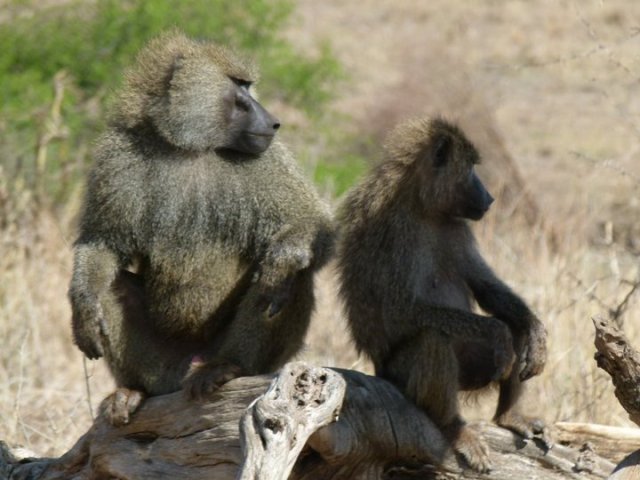
Baboons at Tarangire.

Posted in Tanzania | Tagged , | Leave a comment

Tanzania – Part 3: Monduli Juu

MonduliMarket

Running Log, 12/27/10 – about 12 miles, from Monduli to Monduli Juu and back, with Oju

It may be that everything I have written so far has been motivated by a desire to write about the run I had on Monday, Dec. 27th. That was the day that Oju and I ran from the town of Monduli to the village of Monduli Juu (Monduli Highlands) and back again, a round trip of about 18 kilometers.

It’s hard to fully recall, let alone describe in words, the feeling I had on that day. I remember the swelling sense of freedom and joy at running under the hot sun up the dirt road, seeing an occasional motor bike and passing Maasai children tending cattle on the hillside. On that day, I was as glad as I’ve ever been that I was a runner. Although it sounds like an exaggeration, without that run I’m not sure how much I would have understood about Oju, about Arusha, about myself. That run seemed to make all the difference — and for a few hours, at least, I didn’t have to see Tanzania through the eyes of a baffled, apprehensive tourist, but instead could feel it through the soles of my feet and in the dust of the road stretching lazily before us.

To explain what led to that run in Monduli, I have to go back a few years.

When Joni returned to Tanzania in 2007, she didn’t really have any plan that covered basic things like finding a place to stay. She had many friends and contacts in Arusha, though, so she ended up there and set about figuring out the next step. Although I don’t know the whole series of events that led her there, Joni ended up staying for several months in Monduli with a woman named Rose, a teacher who worked at a school that served the local Maasai. Joni lived with Rose and helped take care of her house and two young sons.

TZ_joni_and_rose
Joni with Rose and her two sons

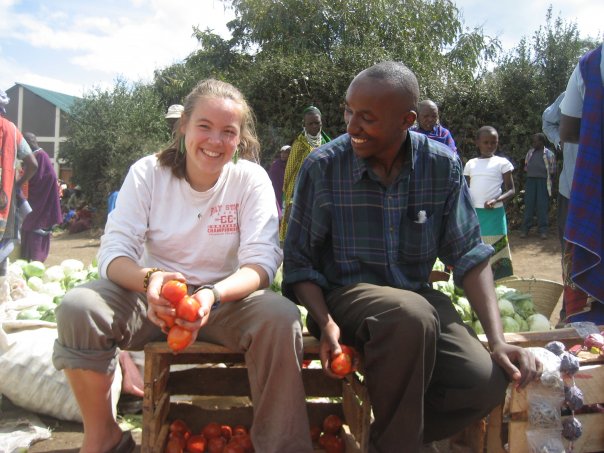
While living in Monduli, Joni began getting to know some of the people who worked at the open air market in the center of town. One of those people was Oju, a young man in his early twenties who sold produce at the market. They became friends, and Joni discovered that Oju liked to run. Or to put it more exactly, she found out that he would regularly run from Monduli to the Masaai market that was held twice a week in the village of Monduli Juu, about 9 Km away.
TZ_joni_and_oju

Joni and Oju selling tomatoes at the Monduli market, circa June 2007. Notice she is wearing a BSC XC Championship t-shirt.

At least once, Joni ran part of the way with Oju. It was then that she found out that the road to Monduli Juu started easily but then rose sharply over a thousand feet into the hills. I remember her writing about this run, and I remember wishing I could have seen that road.

When planning our trip, I knew there would be few opportunities to run for pleasure. The city was crowded and dirty. and the air pollution from charcoal fires made hard breathing painful. Once on Safari, predators would make the bush far too dangerous. As a runner herself, Joni understood instinctively my need to do a “real” run, and she arranged it with Oju that he and I would run together in Monduli on one of our free days. As the day approached, I experienced a mix of intense anticipation for the run tempered by a small voice in my head that wondered whether I’d be able to handle it.

I don’t think non-runners really understand or appreciate that even fit runners always have these voices of self-doubt. Going into a race or even a challenging workout we always wonder whether we’ll be up to the challenge. I was in that same state of mind thinking about the run with Oju. Here, in no particular order, were the things that worried me and nagged at my self-confidence:

The sun – I was newly arrived from New England, where the temperature had been below freezing for three weeks and the sun had been a listless visitor lurking low on the horizon for only nine hours out of every twenty-four. From that reality, I would be running for a couple of hours in the middle of the twelve-hour equatorial day, with the sun directly overhead. As far as I knew, we would have no water for the twelve mile round trip.

The hills – From Joni’s description, these hills seemed really steep and really long. I didn’t know exactly what that meant, but having seen the hills around Arusha, I worried that the mountains would break me, and I’d be left gasping and walking.

Oju’s fitness – I really had no idea how fit Oju was, but I knew that he did this run regularly and that he had sprinted up the hill behind his parents’ house with a spring in his stride that I hadn’t felt in twenty-five years. I knew he wouldn’t abandon me, but feared that I would be a weakling on this run and struggling for the better part of it as I tried to keep up with him.

It was with these thoughts in my head that I prepared for our third day in Tanzania.


We woke early, ate breakfast, and headed downtown. The plan was to do a few errands, meet Oju, find a dala dala heading to Monduli and get there in the late morning. Oju and I would run. Joni and the others would visit with Rose and her kids and have lunch with them. In the afternoon, we would get a ride back to Arusha from another of Joni’s friends who was heading that way.

Our second trip into the city was scarcely less chaotic than the first one. The day before had been a Sunday, and many shops and businesses had been closed. Now it was Monday, and the level of activity seemed to be at least double. Everything took longer. Everyone seemed a little more aggressive, a little more edgy. Even Joni began to get exasperated as she tried to guide us through the hubbub to places where we could do our errands, while brushing off the flycatchers who trailed after us.

When it was time to leave, it took us a long time to find a dala dala that was not empty. The problem with the empty ones was that, this being Africa, they wouldn’t leave until they were full. So if we wanted to avoid waiting for another hour, we had to find one that was already half full but that had room for the six of us. Eventually we settled for one that was mostly empty, and put up with several circuits of the downtown area as the dala dala’s driver and runner tried to round up more riders. With all this, we didn’t actually leave Arusha until about 11:30, and didn’t arrive at Monduli until 45 minutes later.

Monduli seemed very small and provincial after Arusha, not that this was a mark against it. For one thing, the air was much better here. For another, no one immediately came over to sell us stuff. Joni gave us a very brief tour of the market, greeted some old friends, and then it was time for our party split up.

As everyone else headed off to Rose’s house, Oju and I went to drop off my backpack at Oju’s room, which was one of several in a one-story cinder block building near the main square. I took another long drink of water from the bottle I had brought with me, and then left it in Oju’s room. It was time to start running, and I was giddy with anticipation.

Ah, but I have forgotten to tell you about Oju’s shoes.

When Joni was living in Monduli back in 2007, she did some running with a pair of well-worn ASICS that she had had for at least a couple of years. When it was time for her to leave and return to the States, she decided she would be buying new shoes and she knew that Oju could use them, so she left the shoes with him. I’m not sure what Oju was wearing before that, but they must have been trouble, because Joni’s shoes were at least a size too small, probably more. But three and a half years later, he was still using them for his runs to Monduli Juu.

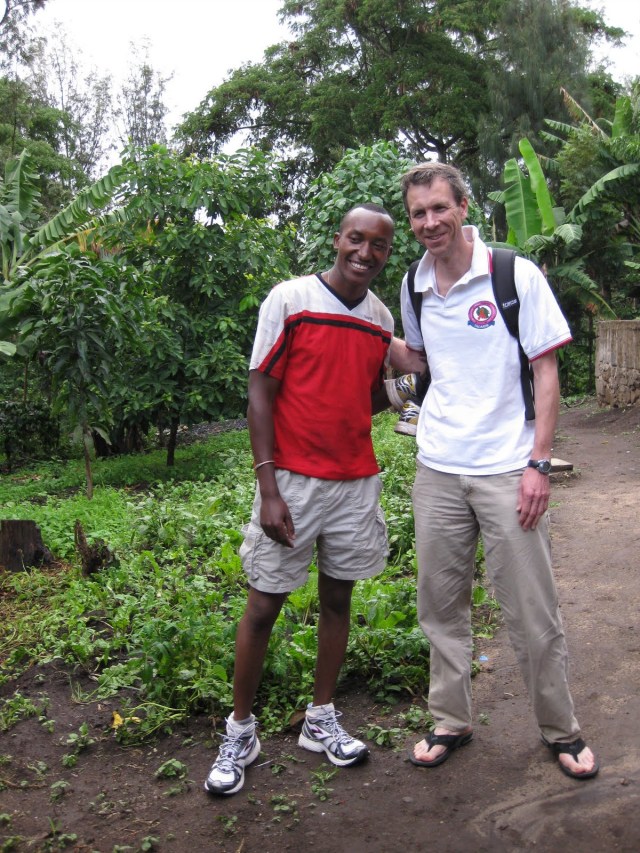
In the weeks leading up to our trip, Joni had told me I should bring an extra pair of running shoes that I wouldn’t mind leaving behind. So I brought one pair for hiking in, one pair for running in, and one to give away. It turned out that Oju was the beneficiary. When I arrived at his room in the center of Monduli, I pulled out this pair from my backpack and made a presentation of sorts. Oju took off the shoes he had gotten from Joni, which were too small, and put on the ones I had brought, which were too big. I had this terrible feeling that they would be the cause of blisters, so I convinced him to wear two pairs of socks.

This whole exchange made a big impression on me. I couldn’t quite imagine having such a strong desire or need to run that I would do 18 kilometers twice a week in shoes that forced my toes up tight into the front of the shoe. And then to exchange them for big clown-feet shoes that were too big seemed very unfair. And yet Oju assured me the “new” shoes were much better. The next time I go to Arusha, I’m going to bring the right size running shoes.


We set off at a leisurely trot, and my Swahili lesson began. We took a few turns to leave the main village, so I learned “kulia” (right), “kushoto” (left), and “sawa mbele” (straight ahead). The road was slightly downhill at first, then flattened out. The surface was a reddish dirt, soft without being too loose. The sun was almost directly overhead, but the temperature was very comfortable, and there was a pleasant breeze. It was a beautiful day for a run.

As we left the village behind, we saw small groups of children playing in the fields by the side of the road. Sometimes they yelled something, but it was never sharp and edgy the way the kids had yelled in Arusha. I began to relax.

After about a mile and a half, the road began rising. There was no mystery about where we were heading. We had been able to see the mountains rising up in front us almost since we started. Our pace was still very slow and deliberate. Even so, the steady climbing kept us breathing fairly hard, and there were only a few words exchanged. “Kilima,” said Oju, gesturing at the road in front of us. I repeated “kilima,” and then to make sure, “hill?” Oju said yes. I repeated “kilima” a few more times, because it seemed this would be a very useful word.

After several miles of steady progress, we turned a corner and began ascending a much steeper hill. Here the grade was so severe that the road had been paved to keep it from washing away during the rains. I was just putting my head down, when Oju stopped and began walking. It was a little surprising at first, but then seemed such a sensible thing to do that I fell in step beside him. We were, after all, in no hurry. The road was long, the hill was steep, and we had plenty of time.

I began to think about time. It seemed to me that no one every became a distance runner without having a lot of time on their hands. Obviously no one who was in a hurry and who had money to spend would choose to run from Monduli to a distant outpost six miles away. I thought of all the distractions in my life, and the even greater sense of distraction I sensed in the kids at Concord. There was always something to do, and always someplace to go in a hurry. Oju was not in a hurry. He had all day, and so did I.

I thought about how, at our gentle pace, I could easily run for twenty miles, and then do it again the next day, and the next. Joni had told me that when she was living in Monduli, she would sometimes walk the six miles from town to the main road back to Arusha to catch a bus there. She didn’t need to, she just had time for it and nothing else to do.

In the days that followed, we would drive through the Maasai lands, and would see Maasai men, women, and children walking miles and miles from the nearest village. They could and did walk all day and were never in a hurry. Later, in the national parks, we would get the same impression from the giraffes, elephants, zebras, and other creatures that slouched their way through the hot African day. No one rushed. There always seemed to be ample time to get wherever you needed to go. Even the big cats, who could, had they wanted to, have shown us sprinting that would have made Usain Bolt look like he was running backwards, mostly just slept. These were the thoughts I had as we resumed our easy trot up the road.

After the steep grade, the pavement disappeared again, and we made our way up through the lovely countryside. From time to time we would come across children watching over herds of cattle or goats. Once we met two boys on the road, who ran with us for a little with big smiles before returning to their animals. At one point, a car passed, raising clouds of dust. It had been the first vehicle we had seen since we had left the plains.

Some time later the road leveled out onto a broad plateau, and we saw a low row of buildings. We had arrived in the market town of Monduli Juu. There were a lot of people milling around, including quite a few wearing the traditional Maasai shuka, the colorful robe draped over one shoulder. Oju knew a lot of people here, and exchanged greetings with several. No one seemed to think it unusual that we had run there.

At one point Oju disappeared into one of the shops and emerged a few moments later with two bottles of water. He nodded back towards the shop and said, simply, “my friend.” We walked about, drinking our water, while Oju pointed to things and told me what they were in English and Swahili, or sometimes just Swahili. I repeated everything.

Although neither one of us was in any hurry to turn around and run down the mountain again, eventually we decided that we would. As the afternoon went on, our families would be waiting for us, wondering if we had been eaten by lions. We set out slowly, gathering speed as the road descended. The run back was easy, under control. I’m sure it took less time to run down than it had to run up, but the pace never picked up, even on the steep paved section.

Back in Monduli, we retraced our steps to Oju’s house, picked up my backpack, and then began walking to Rose’s house — about a mile more. It seemed we could have run, but the walk was a nice cool down. Hakuna shida. No worry.

At Rose’s, I used a bucket of water to sponge off and then changed into pants and a clean shirt. Although everyone else had finished their afternoon meal, we feasted on the leftovers. Ann asked whether I had been able to keep up with Oju. I said that I was able to keep with him in running, but my Swahili was still lagging far behind. But I still had time, lots of time, to learn more.
TZ_jon_and_oju

Oju and I after running to Monduli Juu and back. Oju is still wearing his “new” shoes, his two pairs of socks, and the shorts he ran in. I’ve already sponged off and changed into my civilian clothes.
Posted in Tanzania | Tagged , , | Leave a comment

Tanzania – Part 2: Immersion


ojus_road

Running Log, 12/26/10 — about 4 miles, out and back from L’Oasis

Our first full day in Arusha was in many ways, as remarkable and memorable as any we experienced during the trip. And yet, when I describe it, it sounds commonplace. I woke up, I went for a short run, we went into town to the market, we visited Oju’s family’s house. We returned to the hotel. Why was it so extraordinary? Continue reading

Posted in Tanzania, Uncategorized | Leave a comment

Tanzania – Part 1: Early Morning

tz1_passport

Running Log, 12/24/10 — 3M in early AM, usual morning loop

Ann tells everyone that I hate to travel. I claim that this is an exaggeration, like saying that I hate Christmas or dinner parties… or any other endeavor that requires large amounts of planning, social negotiation, and worrying about food. The truth is that whatever the challenges, once I’m in the middle of these activities, I do fine and I generally enjoy myself, but the period leading up to them makes me anxious; I have to fight the urge to head for the hills. Knowing this about me, Ann was very delicate in approaching the idea of a trip to Africa. Continue reading

Posted in Tanzania | Tagged , | Leave a comment

Tracking fitness? Use your head.

Best-Fitness-Trackers-Gear-Patrol-Lead-1440

“So why is it that fitness technology is so alluring? Part of the problem is that relying on feelings seems ‘soft’ and open to manipulation… For that reason, fitness technology can be a valuable reality check to make sure we’re reading our gut feelings correctly. The data collected by fitness devices can also be a great motivational tool; graphing your progress can be, dare I say it, fun. But it’s also worth making sure that you don’t neglect your odometer neurons, and all the other subtle and complex self-monitoring tools that come pre-loaded in the human brain.” – Alex Hutchinson Continue reading

Posted in Running Research, Training | Tagged , | Leave a comment

Solstice 2015

stones-wintersunset

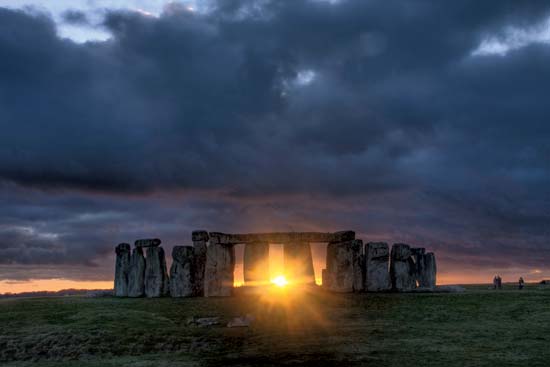
The Northern Hemisphere’s winter solstice occurs at 11:48 p.m. EST tonight.., and I say, let the pagan celebrations begin! Continue reading

Posted in Weather and Seasons | Tagged | Leave a comment

The Long Good-Bye

misty_landscape
I envy people who know when it’s time to leave. I admire their resolution, their lack of sentimentality as they pack up their things and say sincere but prompt good-byes. They don’t linger at the threshold, prolonging the inevitable, but instead offer a brief farewell and are gone. They aren’t tempted, as I am, to hold on to a moment too long, unable to let go until the moment has become distended and a little embarrassing. I envy people who are too busy moving ahead to the next challenge to waste time romanticizing the past. I wish I were more like that. Continue reading

Posted in Weather and Seasons | 2 Comments

Club Nats is Where It’s At

club_nats2

The second weekend in December was the swan song for the 2015 cross country season, with three separate championship events taking place in San Diego, Albuquerque, and San Francisco.  Continue reading

Posted in cross country | Tagged , , | Leave a comment

Book Review: Feet in the Clouds

joss-naylor-auction

“When you consider the demands that the sport makes on strength, stamina, speed, and nerve, together with the constant risk of catastrophic injury, it’s curious that fell-running has never shown signs of evolving into a multimillion-pound sport with a global audience and sponsorship from tobacco companies… The reason is simple: fell-running is inconvenient to watch. Even for the dedicated hundreds who turn up to fell races to spectate (and most modern sports fans would consider even that an act of ill-advised hardiness), there isn’t often much to look at. Yes, the action is incomparably more exciting than running around in circles on a flat track, but most of it takes place out of sight, high in the crags — and clouds — above… The same inconveniences — coupled with the impossibility of conveying the scale of the mountains, the difficulty of the ground, and the violence of the runners’ movements in the same shot — limit the capacity of photographers and television cameras to capture the drama of the sport, especially in an age in which armchair sports audiences expect multiple camera angles, facial expressions, close-ups, replays, overviews… And if a sport can’t be experienced through television, it’s hard for the modern mind to comprehend it at all.” – Richard Askwith, author of ‘Feet in the Clouds’

Forty years ago, a 39-year-old sheep farmer from the Lake District of England named Joss Naylor traveled to the United States to race the Pike’s Peak Marathon in Colorado. Somewhat surprisingly, Sports Illustrated decided that Naylor’s personal story and his presence at this event were worth covering, and the result was a brief, but fascinating profile in the back pages of the issue that ran July 28th, 1975, and a recap of the race a few weeks later in the August 18th issue (“A Hurried Peek at Pikes“). As a high school junior and subscriber to Sports Illustrated at the time, I read both articles and I was fascinated by this man who worked so hard in his daily life, and still found energy and enthusiasm for running up and down mountains more rapidly than almost anyone in the world.

Naylor was a practitioner of “fell-running,” an obscure sport even in its native country. It shows how much of a loner I was that I immediately decided that fell-running was cool, and secretly wondered whether I would be any good at it. After all, I had I always loved running up steep hills. The idea of ascending rapidly up slopes that would stagger lesser mortals seemed both romantic and heroic.

I can now say for certain that I would not have been a good fell-runner. For one thing, I’ve always had a tendency to over-stride, a habit that fatally doomed my three attempts to run decently at the Mount Washington Road Race. But the real reason I would have failed is that I do NOT like descending, and fell runners are insanely good at that. Or, perhaps it would be more accurate to say that good fell runners, like good Tour de France riders, are a little insane in their ability to descend mountains at breakneck speed, fearless as they plunge to what could easily be their doom.


I hadn’t thought about fell running for a long time, but earlier this year, I was contacted by Richard Askwith about a blog post I had written. Through our brief correspondence, I found out that Askwith, an editor for the U.K.’s Independent newspaper, had written a book about fell-running called Feet in the Clouds: a Tale of Fell-Running and Obsession.

He was gracious enough to send me a copy of the book, and I read it — slowly, over the course of several months — savoring Askwith’s stories from a strange world of brutal and majestic endeavors that seemed more suited to the 19th century than the 21st.

“Feet in the Clouds” is at least three books in one, with the different parts woven together to make a coherent whole.

The first book is a modern history of the sport of fell-running and a survey of its current status. Askwith patiently explains the cock-eyed relationship between the amateur and professional sides of the sport, the ongoing challenge of staging events that involve considerable risk to the participants, and the other existential threats to the sport. He writes as both an observer and competitor, and offers insights into the community of fell-runners, race enthusiasts, and event organizers that somehow keeps the sport alive.

The second book is a series of profiles of fell-running legends past and present. These are wonderfully done, and really help the reader to understand and admire athletes who have received little fame for athletic feats that rival those of much better known endurance runners. For example, Askwith describes how Chris Brasher, Olympic gold medalist in the steeplechase at the Melbourne Olympics and one of Roger Bannister’s pacers in the first sub-four-minute mile, became interested in fell-running, and how he came to appreciate the leading fell-runners of his time. How he fared compared to those relatively unknown champions, helps provide perspective on the achievements of the fell-running specialists. Askwith makes a convincing case that some of those specialists had talent at least equal to the best British track athletes of their day.

The third book-within-a-book is the most personal: it is the story of the author’s own quest to complete what is called the “Bob Graham round,” a grueling circuit of 42 peaks that must all be summited in under 24 hours. I won’t spoil the story by describing each of the times that the author tries and fails to complete the round, or the maniacal planning that goes into preparing for it, but the author’s description of his final attempt is one of the most moving parts of the book. It reminded me of Berndt Heinrich’s account of running a 100K race, a mesmerizing account that concludes his book “Why We Run,” and Askwith’s account is just as compelling.

I honestly don’t know whether fellow (not fell) runners who are accustomed to relatively flat, even surfaces, and certified 5k courses will find “Feet in the Clouds” to be too off-the-beaten track. I somehow doubt it will convince many people to take up the sport, if they haven’t already had some experience with it. Likewise, in an era when simulated “adventure” races like Tough Mudders and the like, satisfy the shallow urge to experience well-packaged suffering, the idea of simply running up and down mountains for 24 hours might not fire the imagination.

But even if the sport seems daunting — or “weird and English,” as the author describes it — I recommend the book highly. In it, you’ll find a remarkable landscape populated by remarkable people. These are described with love and great care by someone who himself became obsessed by fell-running for more than a decade, and suffered for its sake. The result is a passionate history, and a tribute to a little-known sport that may be disappearing from the face of the earth.

Richard-Askwitch-author-o-009

(The author, descending)

Correction:

An earlier version of this post mis-identified the British Olympian who took up fell-running as Chris Chataway (the other “Chris” who helped Bannister in that famous mile race at the Iffley Road track in Oxford). It was actually Chris Brasher, an Olympic champion in the steeplechase at the 1956 Olympics, a founder of the London Marathon, and a pioneer in the sport of orienteering in Britain.

Posted in Books and Movies, Uncategorized | Tagged , , , | 2 Comments